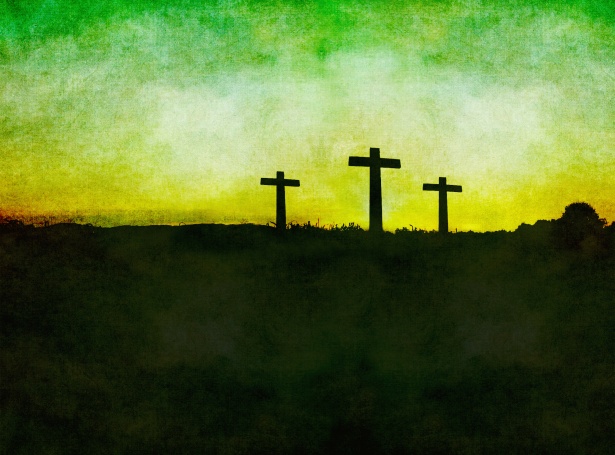
He asked them, “But who do you say that I am?” Peter answered him, “You are the Messiah.” (Mark 8:29)
Who Do You Say That I Am?
Jesus asked his disciples a simple question on the road to Caesarea Philippi. It was a simple question but the answer to that question changes everything. “Who do people say that I am?” The disciples had answers such as John the Baptist or one of the prophets; these were the popular opinions of the day. But then Jesus turned it back on them: “But who do you say that I am?” Peter answered him confidently: “You are the Messiah!”
That confession is the turning point of the entire Gospel of Mark. From the very first verse of the Gospel (Mark 1:1), the Evangelist Mark declared Jesus as the Messiah. But it is only until Chapter 8 that a human voice says it. When Peter speaks those words, something shifts. The focus of the Gospel moves from the miracles of Galilee to the journey toward Jerusalem, the cross, and toward the thing that nobody in the crowd, not even the disciples were yet prepared to understand. We ask ourselves the same question today. Who do you say that Jesus is? Not what your parents said. Not what the popular opinion is. Who do you say that He is? The answer to that question will determine everything about how you carry your life.
The Cross Without the Messiah
Immediately after Peter’s great confession, Jesus begins to teach them about what lies ahead. “The Son of Man must undergo great suffering and be rejected by the elders, the chief priests, and the scribes, and be killed, and after three days rise again.” Peter did not wait to hear the end of that sentence. Peter was a man quick to act and quick to speak. He took Jesus aside and began to rebuke him. Can you imagine? Peter, who had just declared Jesus to be the Messiah, is now telling the Messiah what to do. And Jesus turns around, looks at his disciples, and says, “Get behind me, Satan, for you are setting your mind not on divine things but on human things.”
Where are you setting your mind? That is the question Jesus is asking, not only of Peter, but of us. Are we turning our attention to divine things or are we fixed only on the human things? Peter heard the suffering. He heard the rejection. He heard the arrest. And his heart moved to protect Jesus. But he did not hear the last words regarding the resurrection: “after three days rise again.” He could not yet see beyond the pain to the power of God. He set his mind only on the human things.
This is not Peter’s failure alone. This is our failure too. When we look at the cross and see only suffering, only death, only shame, then we are setting our minds on human things. We are looking at the cross without the Messiah. Here is what we must understand: the cross without the Messiah is just an instrument of torture. The Romans knew this well. The cross was the favored tool of empire, used to frighten populations into submission, to stamp out resistance, and to make an example. It was a slow, public, excruciating death. You may know that word, excruciating as it comes from the Latin root meaning “from the cross.” It was a pain so severe that a new word was invented just to describe it. The pain of the cross and the pain of our human existence were redeemed by that rabbi from Nazareth, because the mystery was that He was not just a mere rabbi but someone far beyond the earthly existence.
The Mystery That God Wants You to Know
When the Messiah takes on the cross, everything changes. In the Eastern tradition and in the Mar Thoma Syrian Church, we call this mystery or in Malayalam, Rahasyam. What is mystery? A mystery is not simply something unknown. A mystery is something hidden that God intends to reveal. It is a secret that God keeps, not to withhold from you, but to reveal to you in the right time, in the right way, to the one who believes. The cross is a mystery in this sense. For those who are perishing, the cross is foolishness. It is a sign of weakness, of death, of the defeat of a misguided rabbi from Nazareth who could not save himself. But for those who believe, for those to whom God has opened the eyes of faith, the cross is the power of God. It is the wisdom of God.
God did not give the Israelites or the rest of humanity merely a religious system. He gave the world a revelation. And that revelation, from Genesis and all through through the Torah, through the prophets, through the psalms and wisdom literature, comes to its full expression on the wooden beams of the cross. The Bible is not a straight line from beginning to end. It is a circle. What began in the Garden of Eden is fulfilled in the Book of Revelation which is a recovery of God’s Creation. The Tree that brought death in the Garden is answered by the wooden beams of the cross which brings life. The estrangement from God that humanity has carried since the beginning is the wound which the cross heals. This is the mystery that God wants you to know.
Take Up Your Cross and Follow Me
He called the crowd with his disciples and said to them, “If any wish to comeafter me, let them deny themselves and take up their cross and follow me. (Mark 8:34)
What is this cross that we are to take up? There is a common misunderstanding here. Many people hear these words and think the cross I have to carry is my suffering: sickness, difficult marriage, financial trouble, or any other grief. “Keep calm and carry on” are the words we often hear Bear your burdens and call it discipleship. But this is not what Jesus is saying. There is only one cross. And that cross is the cross of Jesus Christ.
To take up your cross is not to carry your personal suffering in silence. To take up your cross is to carry the confession just as Peter made on the road to Caesarea Philippi. “You are the Messiah!” To take up your cross is to declare to the world the thing that sounds foolish to the world: that a man from Nazareth in Judea, crucified two thousand years ago, rejected by the religious leaders of His day, sentenced by the Roman government, hung between heaven and earth while people mocked him and his disciples scattered, is the Savior of the world.
This is the cross you carry. It is the confession of your faith. It is taking the name of Jesus on your lips, writing it in your heart, carrying it with you in all places, and letting that testimony redefine and redraw the shape of your life. The world will call this foolishness just as it called it foolishness then. But the cross of Jesus Christ is not a symbol of shame. The cross, with the Messiah upon it, is the banner of victory.
The Cross with Messiah as Victory
When the disciples stood at the foot of the cross on that Friday, they understood nothing. Their rabbi was dead. Their miracle worker was gone. Their hopes were buried in a tomb. The cross, for them, was still only what the Romans intended it to be, another instrument of death and defeat. But then, three days later, the risen Christ appeared to them. And in that moment, everything they had seen and heard was transformed. The cross was not a defeat. It was the decisive victory of God over the powers of sin, death, and all that is the enemy of God. It was the instrument by which God addressed the deepest need of every human heart which is our estrangement from God.
Jesus says, “For those who want to save their life will lose it, and those who lose their life for my sake and for the sake of the gospel will save it.” What will it profit anyone to gain the whole world and forfeit their life? The cross of Jesus Christ turns the logic of the world upside down. Death becomes a doorway. Loss becomes gain. The one who is willing to lose their life for Christ’s sake finds life, or the real life God wanted for us, “abundant life” (John 10:10). It is eternal life, restored life, and life in Paradise. That same Paradise, which was Eden that the First Adam lost through his pride, was regained for humanity through the Second Adam, the Lord Jesus. He is the firstborn from the grave, and the One through whom the gates of Paradise are opened once again for us. The Cherubim who guarded Gate to Eden, which was shut to all humanity after Adam and Eve, have set aside the swords for the Lord Jesus to enter in and proceed before us, and we merely need to follow Him in.
Then Jesus gives one final, searching word: “Those who are ashamed of me and of my words in this adulterous and sinful generation, of them the Son of Man will also be ashamed when he comes in the glory of his Father with the holy angels” (Mark 8:38). But turn that around. Those who confess him, that is, those who carry his cross, who take his name on their lips without shame, God himself will take their name on his lips in that day. God will be proud of those who confess that Jesus is Lord.
This Lenten season, let us carry the cross. Not the cross of our burdens and sorrows, though God walks with us in those too. But let us carry the cross of our confession. Let us say along with St. Peter, without shame and without reservation: You are the Messiah! Let us not set our minds on human things alone, but lift our eyes to divine things, to the empty cross, to the risen Christ, to the mystery that God has chosen to reveal to those who believe. The cross is not a symbol of death anymore. For those who believe, the cross is the banner of the victorious God and King, our Lord Jesus Christ, the Lamb who was slain, and who lives forevermore. Take up the cross and follow him.